

What is AQI?
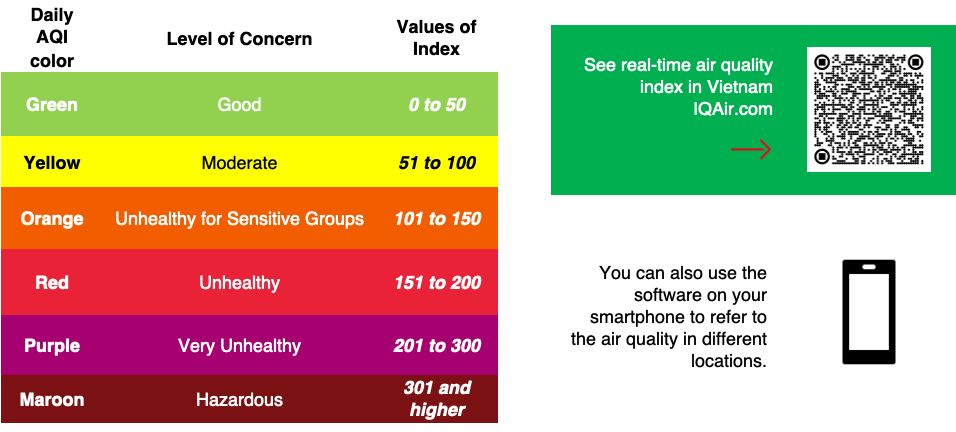
•The U.S. Air Quality Index (AQI) is a tool for communicating about outdoor air quality and health. The AQI includes six color-coded categories, each corresponding to a range of index values.
•The higher the AQI value, the greater the level of air pollution and the greater the health concern. For example, an AQI value of 50 or below represents good air quality, while an AQI value over 300 represents hazardous air quality.
•The color makes it easy for people to quickly determine whether air quality is reaching unhealthy levels in their communities.
How to take proactive care of your health?
•Refer to the Air Quality Index level to adapt your daily routine and comply with instructions from authorities (if any).
•Make sure you regularly ventilate your home and office, to avoid indoor concentration of pollutants (except in case of ozone pollution).
•Fragile persons should limit their outdoor activities and avoid dense traffic axes, especially during rush hour.
•Limit the amount of time spending outdoors if the air quality is unhealthy.
•Keep your home and office well aerated, avoid smoking in your home, don’t burn trash.
•Do exercise regularly. When pollution levels are high, exercise in a gym or use an exercise machine at home.
•Face masks can protect you from big Particular Matter. You should wear a mask when going out.
•If you experience breathing difficulties or chest pain, see your doctor immediately.
•Let’s share the spirit of raising awareness of environmental protection for the community.